Spring Marathon Season: Recovery Strategies for Toronto Runners
Spring in Toronto means one thing for thousands of runners: race season. The Sporting Life 10K, the Toronto Waterfront Half-Marathon, Around the Bay in Hamilton, the Toronto Marathon — the calendar fills quickly. For runners in North York and across the city, spring racing is exhilarating and demanding. But the weeks surrounding a major event are also when the most preventable injuries occur — and when sports massage and chiropractic care can make the biggest difference to your performance and recovery.
At Axon Chiropractic and Rehab in North York, we treat runners year-round and see a predictable pattern every spring: eager athletes who have ramped up their mileage too quickly, pushed through warning signs, or neglected recovery in the final weeks before race day. This guide covers the most effective recovery strategies, from the taper phase right through to post-race restoration.
Why Spring Marathon Season Is High-Injury Season
The two highest-risk windows for running injuries are: the final 4 weeks before a goal race (when training load is highest and the body is most fatigued), and the 2–3 weeks immediately after the race (when runners return to training too quickly on a depleted body). Understanding this pattern is the first step to avoiding it.
Common spring marathon injuries we treat at our North York clinic include:
- IT band syndrome — outer knee pain that worsens as mileage increases
- Patellofemoral pain syndrome (‘runner’s knee’) — pain around or behind the kneecap
- Plantar fasciitis — heel and arch pain, often emerging during taper
- Medial tibial stress syndrome (‘shin splints’) — common in those who’ve overbuilt mileage
- Hip flexor and piriformis tightness — often contributing to lower back and leg pain
- Achilles tendinopathy — particularly in runners who have added hill training or speed work
Pre-Race Recovery: The Taper Phase (3–2 Weeks Out)
The taper — the planned reduction in training volume before race day — is as important as the training itself. But it’s also when many runners feel physically worse: legs feel heavy, minor niggles suddenly become noticeable, and anxiety peaks. This is entirely normal and expected.
Sports Massage in North York During Taper
A sports massage session 10–14 days before your race is one of the most valuable investments you can make. At Axon Chiropractic and Rehab, sports massage therapy during the taper focuses on:
- Flushing residual metabolic waste from overworked muscles
- Reducing myofascial adhesions that have built up through high-mileage training
- Addressing the lower limb’s most overloaded structures (calves, quads, IT band, hip flexors)
- Calming the nervous system
Avoid deep tissue work in the final 4–5 days before the race — this can temporarily increase soreness and interfere with your peak performance. A lighter flush massage 2–3 days out is fine for experienced runners.
Chiropractic Assessment Before Race Day
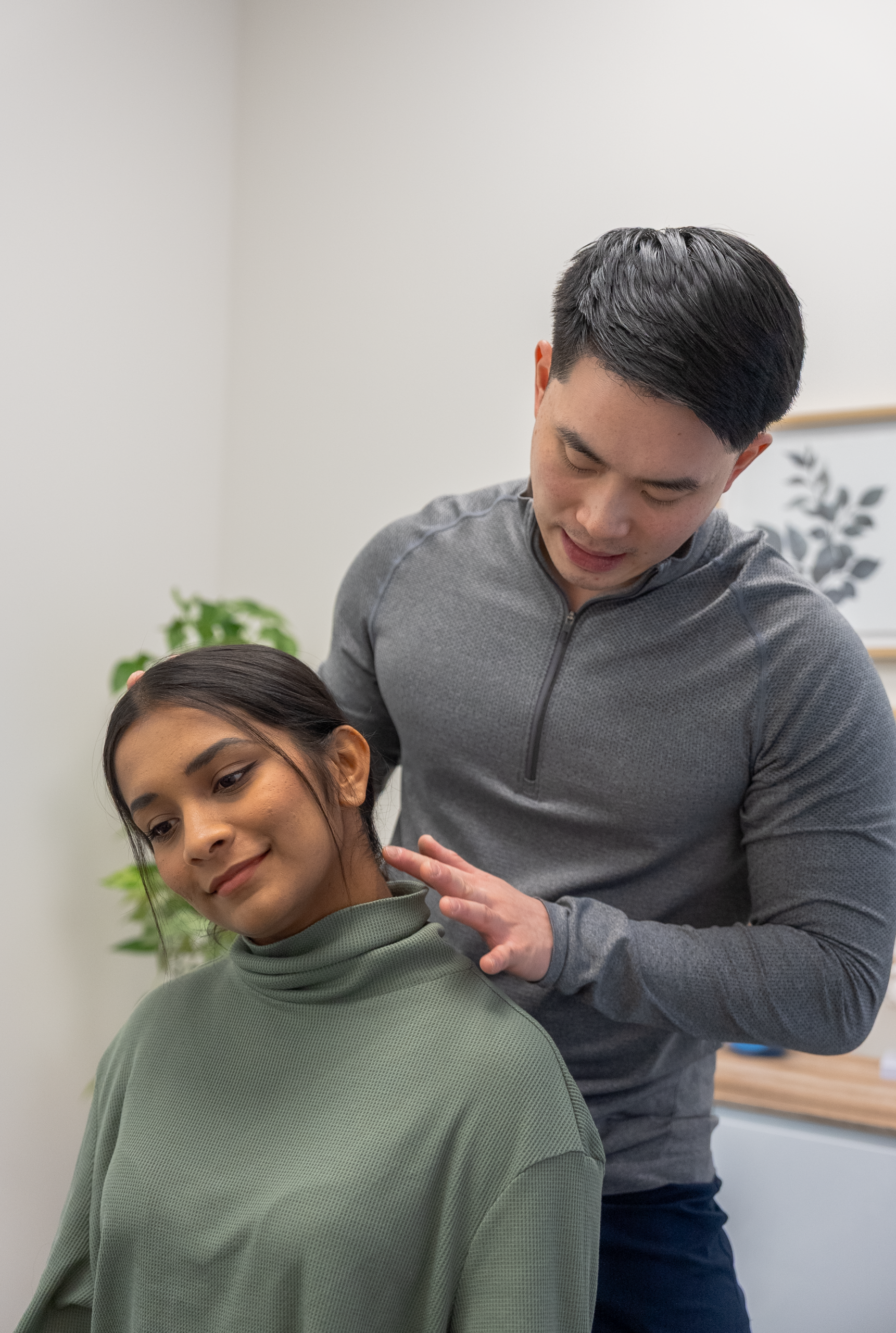
A pre-race chiropractic check at our North York clinic can identify biomechanical issues that may affect your race: sacroiliac joint asymmetry, restricted hip mobility, or lumbar tension that could cause you to compensate mid-race. Addressing these before the start line — rather than after — is always the better strategy.
Race Day: Strategies to Protect Your Body
There is limited chiropractic intervention during a race, but these race-day practices meaningfully reduce injury risk:
- Warm up for at least 10–15 minutes with dynamic movements (leg swings, hip circles, walking lunges) rather than static stretching before you run
- Run your planned pace — not the pace adrenaline suggests in the first kilometre. Going out too fast is the single most common cause of mid-race collapse
- Maintain hydration consistently — dehydration increases muscle cramping and perceived exertion
- Walk through aid stations to drink properly rather than trying to run and drink
- If you feel sharp or unusual pain (not general fatigue), walk. Finishing injured costs you 6–12 weeks of recovery
Post-Marathon Recovery: The Critical First 4 Weeks
The finish line is not the end of your training cycle — it’s the start of a mandatory recovery phase. After 42.2 kilometres, your muscles, connective tissue, immune system, and nervous system are all depleted. Rushing back to training is the most common mistake and the most preventable source of overuse injury.
Week 1: Rest and Restoration
Keep walking to maintain circulation but avoid running entirely. Light swimming or cycling can begin mid-week if you feel ready. The goal is blood flow without impact load on your legs.
Week 2: Sports Massage and Chiropractic
This is the ideal window for your post-marathon sports massage in North York. At Axon Chiropractic and Rehab, post-race massage therapy focuses on:
- Thorough assessment of any areas of pain or tightness that emerged during or after the race
- Deep tissue work on the calves, hamstrings, quads, and IT band
- Trigger point release for the piriformis and hip flexors
- Lymphatic drainage techniques to reduce residual swelling in the lower legs
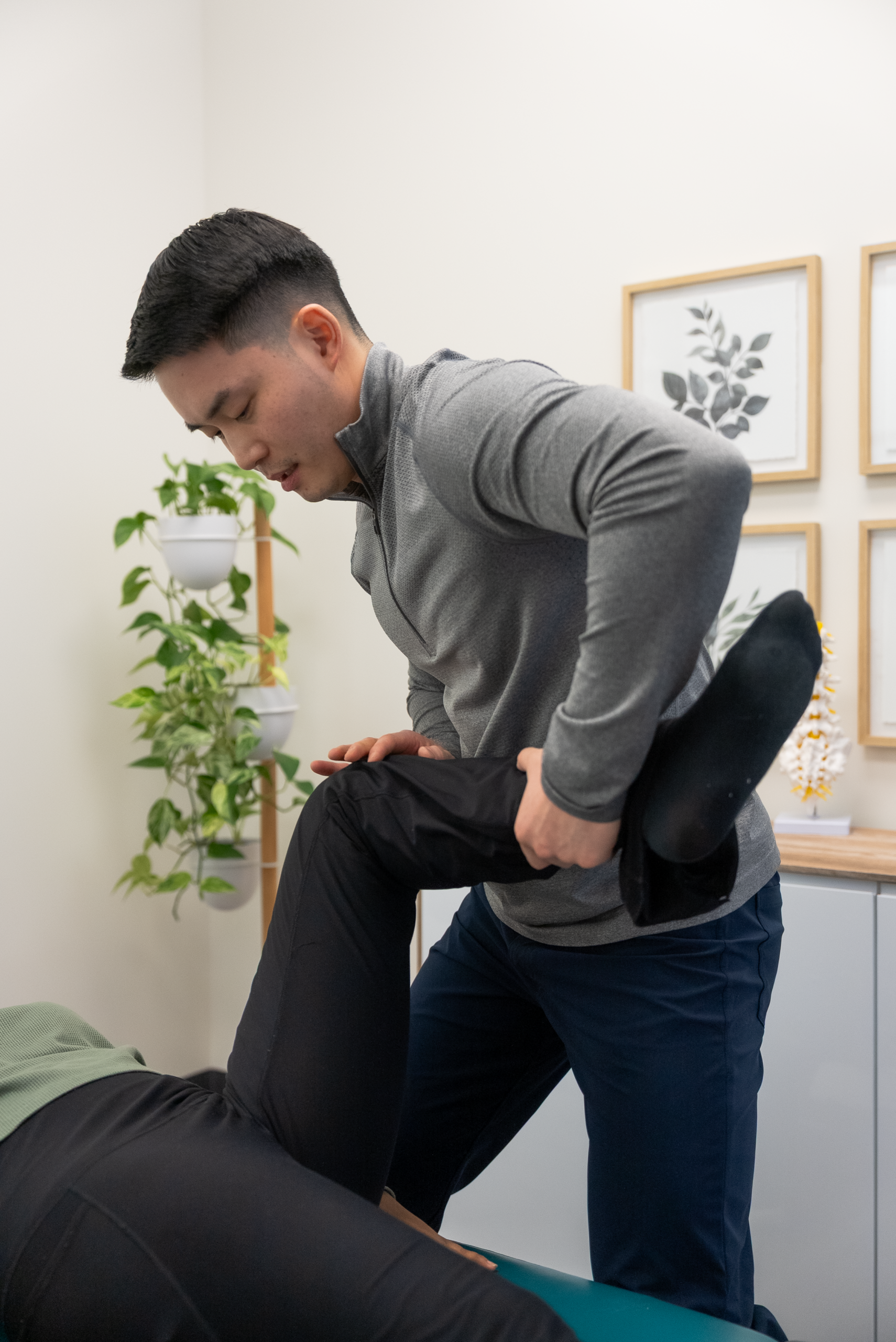
A chiropractic session in the same week addresses any spinal or pelvic compensations that developed over the race — many runners exit a marathon with notable asymmetry in their gait that, left uncorrected, becomes the seed of the next injury.
Weeks 3–4: Gradual Return to Running
Begin with short, easy runs (20–30 minutes at conversational pace). Use the ‘80% rule’: if you feel less than 80% during a run, stop and walk home. Your aerobic fitness is intact — there is nothing to gain from forcing hard efforts in the first month of recovery.
Frequently Asked Questions
Ready to Run Strong This Spring?
Spring marathon season in Toronto is here. Whether you’re tapering, racing, or recovering, Axon Chiropractic and Rehab in North York is your sports injury and recovery partner.
Address: 200 Consumers Road, North York, Ontario – easily accessible from Willowdale, Victoria Park and Sheppard, the Parkway Forest Community, and the Yonge-Sheppard corridor.
We offer flexible booking and a team that includes Dr. Perrin Yiu, DC (north york chiropractor) and multiple Registered Massage Therapists — all under one roof.
Book your appointment online or call us at 416-901-2966.